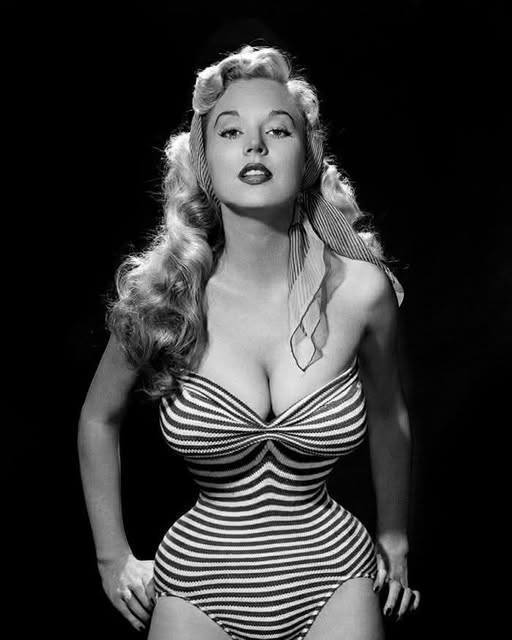
Few figures in the history of entertainment can claim a life as electrifying as Tempest Storm. Her story was not one of quiet ambition or gradual success—it was a blaze that consumed limitations and transformed them into triumph. Even her chosen name hinted at the extraordinary persona she would become. With hair that seemed to crackle with energy and an aura that demanded attention, she carved a career out of sheer determination, courage, and a rare understanding of human fascination. Yet, before the bright lights and the roar of audiences, before the stage and the spotlight, she was Annie Blanche Banks—a child born on February 29, 1928, in Eastman, Georgia, shaped by circumstances that could have easily stifled her potential.
Growing up, Annie’s environment was far from nurturing. She faced scarcity, instability, and challenges that could have deterred most children from dreaming beyond survival. Home did not offer comfort or guidance, and the future appeared uncertain at best. Yet, from a young age, she recognized that survival required more than passive endurance—it required active, relentless effort. By the age of fourteen, she made the difficult decision to leave her home behind, not in rebellion, but in quiet determination. Annie understood that the life waiting for her there was too small, too constrained, and she refused to settle.
Her adolescence was marked by rapid, consequential decisions, including two early marriages, both brief and ultimately unfulfilling. These relationships, while offering temporary stability, did not satisfy her longing for autonomy and self-expression. What she sought was freedom—the chance to craft her own path on her terms. For Annie, the possibilities seemed vast, but only one place could accommodate the intensity she carried: Hollywood.
Arriving in Los Angeles without money or connections, Annie faced an intimidating world. She navigated her new environment with grit, taking on various jobs to sustain herself while observing the glamour around her. She learned that beauty alone was insufficient; success required strategy, timing, and an understanding of human psychology. Her natural charisma helped her stand out, but she honed her skills to command attention and respect. When she first stepped into a burlesque venue, she immediately recognized the stage as more than a performance space—it was a platform for influence, storytelling, and empowerment.
Tempest Storm emerged as a persona born from this vision. By adopting this name, she transformed her identity and embraced the autonomy that had long eluded her. The name itself was emblematic—a declaration of power, unpredictability, and presence. Her performances were meticulously crafted, blending artistry, timing, and audience engagement. She did not merely perform; she communicated through movement, expression, and character. She redefined what it meant to be a performer, turning burlesque into a sophisticated art form that celebrated confidence, skill, and narrative depth.
Her rise was rapid but earned through insight and persistence rather than luck. Where many performers relied on industry gatekeepers, Tempest Storm relied on her instincts and vision. She captured audiences with a combination of strength and elegance, forging a path that commanded admiration from all who watched her. Hollywood took notice. Studio executives, photographers, and directors saw something authentic, magnetic, and unreplicable. Unlike many contemporaries shaped by studio systems, Tempest refused to compromise her identity for mass appeal. Her career was self-directed, self-defined, and fiercely independent.
Beyond the stage and screen, Tempest Storm’s life became a story of empowerment and longevity. While others faded from public view, she adapted, evolved, and remained relevant for decades. Her ability to continually reinvent herself without losing her essence demonstrated a profound understanding of resilience and personal branding. Even as audience preferences shifted and cultural landscapes changed, she stayed true to her craft, performing with the same intensity and precision that first captured the public’s imagination.
Her dedication extended beyond professional life. Tempest Storm’s personal journey reflected the same boldness that characterized her stage presence. She embraced love, choice, and personal authenticity, rejecting societal pressures that sought to confine or define women in narrow roles. She championed self-expression, independence, and the importance of owning one’s narrative—principles that resonated beyond entertainment and into broader cultural discussions about autonomy and agency.
