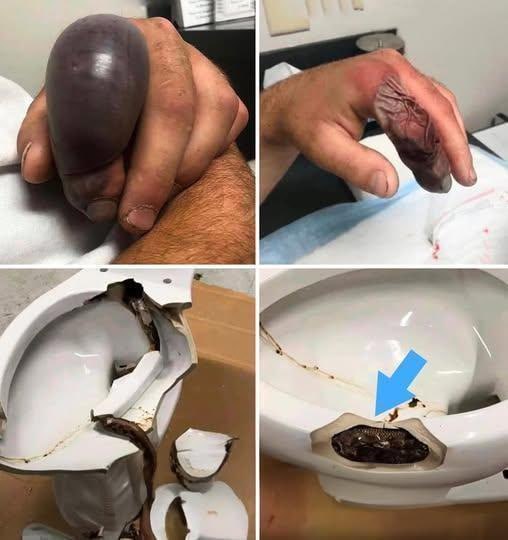
While many people view the bathroom as a sanctuary of privacy and safety, a series of startling incidents across the globe has highlighted a rare but visceral hazard: the presence of snakes in toilets. Though often dismissed as the stuff of urban legend or low-budget horror cinema, the phenomenon of serpents infiltrating domestic plumbing is a documented reality. From the humid jungles of Southeast Asia to the arid landscapes of Australia and even the suburban sprawl of the United States, these encounters serve as a jarring reminder of the thin line between the modern built environment and the untamed natural world. As human habitats expand and climate patterns shift, these cross-species confrontations are becoming a focal point for both public fascination and legitimate safety concerns.
The biological mechanics behind these intrusions are surprisingly straightforward. Snakes are ectothermic creatures, meaning they rely on external environments to regulate their body temperature. They are also opportunistic hunters and seekers of shelter. Plumbing systems, particularly sewer lines and ventilation pipes, offer a damp, cool, and dark environment that can be highly attractive to a variety of species. In many tropical regions, the onset of the rainy season often flushes these reptiles out of their natural subterranean habitats and into the interconnected labyrinth of urban drainage systems. Furthermore, the presence of rodents—a primary food source—within sewer pipes can lure snakes directly into the infrastructure of a home. Once inside the pipes, snakes are remarkably adept at navigating bends and vertical rises, eventually emerging into the bowl of a toilet, which acts as the only visible exit point in an otherwise enclosed system.
The geographical breadth of these incidents is expansive. In Thailand, a country where diverse snake populations coexist with densely populated urban centers, one of the most widely reported cases involved a man who was targeted by a twelve-foot python. The serpent had coiled itself within the plumbing and struck while the individual was seated, resulting in a severe bite to his testicles. The ensuing struggle to free himself from the powerful constrictor required significant effort and emergency intervention. While the victim eventually recovered, the incident underscored the sheer size and strength of the reptiles capable of navigating residential pipes. Pythons, being semi-aquatic and highly flexible, are particularly well-suited for such incursions, often entering through roof vents or damaged sewer junctions.
In South Africa, a Dutch tourist experienced a similarly harrowing encounter with a Cape cobra, one of the continent’s most venomous species. While using an outdoor restroom, the traveler was struck in the genital area, leading to a life-threatening medical emergency. Unlike the python, which relies on constriction and mechanical force, the cobra’s bite introduced potent neurotoxic and cytotoxic venom. The victim required multiple surgeries and intensive care to manage the tissue necrosis and systemic effects of the bite. This case highlighted the specialized medical challenges posed by toilet-based snake bites, where the location of the injury can complicate traditional first aid and surgical repair.
